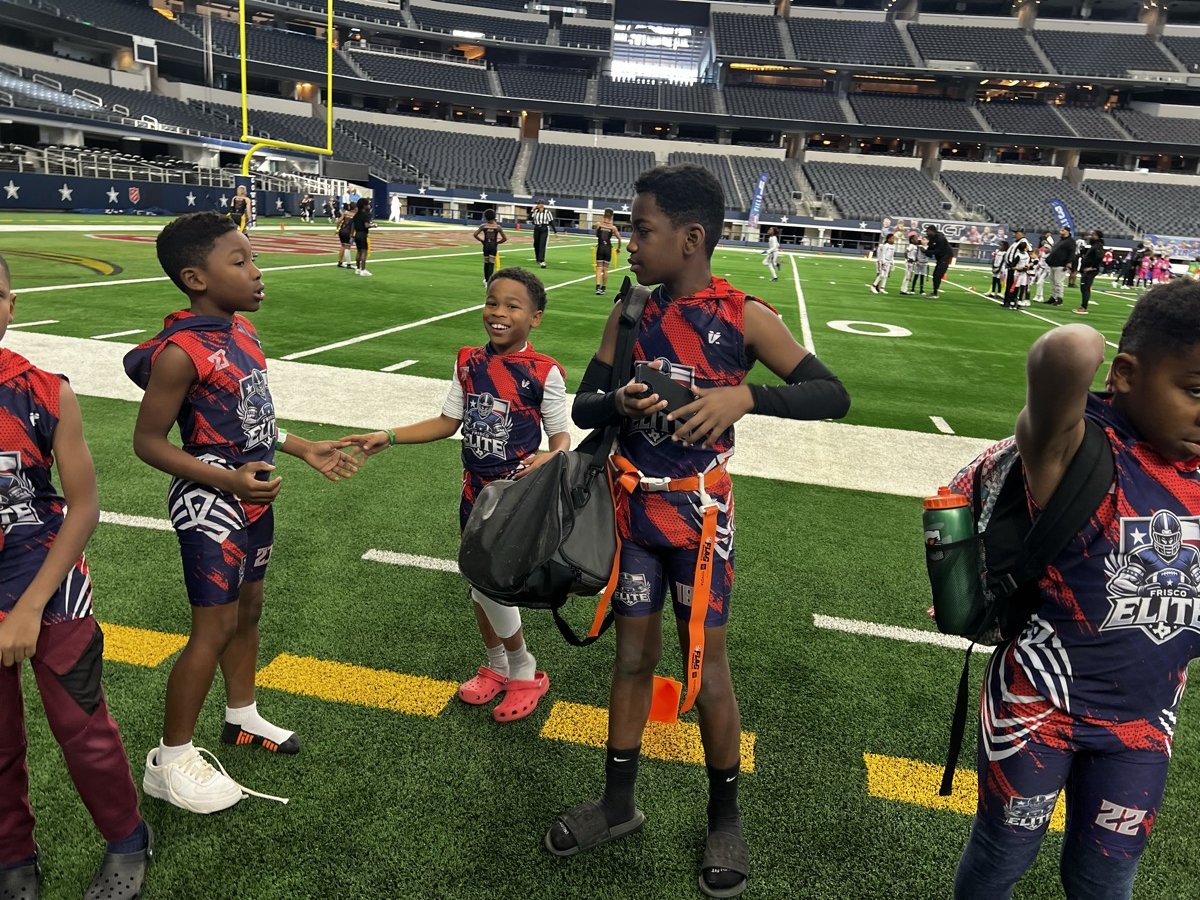
If you want to be fast on the football field, the track is where you learn how. This is not an opinion — it is a pattern that repeats at every level of the sport, from youth leagues to the NFL. The fastest football players in the world almost always have track backgrounds, and there are specific reasons why.
The Numbers Do Not Lie
Of the 332 college football players invited to the 2016 NFL Scouting Combine, 89 percent played multiple sports in high school. The dominant second sport? Track and field — more than half of those multi-sport athletes ran track. That is not a coincidence. That is a development pattern. (USA Football)
NFL Stars Who Built Their Speed on the Track
The list of elite NFL players with serious track backgrounds is long — and it keeps growing:
- Tyreek Hill — Named Track and Field News High School Athlete of the Year in 2012. Earned All-American honors in indoor track at Oklahoma State. In 2025, at age 31, Hill ran a 10.15-second 100 meters at a California track meet — faster than most college sprinters.
- Devon Allen — Three-time USA Champion in the hurdles, two-time Olympian (2016, 2021), and competed at three World Championships. His 110m hurdles personal best of 12.84 seconds ranks third-fastest all time. He signed with the Philadelphia Eagles to play wide receiver. (Track & Field Fan Hub)
- DK Metcalf — Competed in the 100 meters in 2021, running 10.37 seconds against professional sprinters. The speed and explosiveness that make him one of the most dangerous receivers in the NFL were developed on the track.
- Marlon Humphrey — Competed in both the 110m hurdles and 400m at the 2013 World Youth Championships, earning a silver medal. Named to the USA Today All-American Track and Field Team before becoming a Pro Bowl cornerback for the Baltimore Ravens.
What Track Teaches That Football Cannot
Football practice makes you better at football. Track makes you a better athlete. The distinction matters, and here is why:
Running Mechanics
Most football players have never been taught how to run. Track coaches notice issues that football coaches miss — short strides, awkward arm swings, wasted lateral movement. Track teaches athletes to run efficiently, with proper posture, arm drive, and leg turnover. A football player who runs with better mechanics is faster without getting stronger — they are just wasting less energy. (USA Football)
Acceleration and Starts
Coming out of the starting blocks in track is mechanically similar to getting off the line of scrimmage in football. Both require explosive power generation from a dead stop. Athletes who train their starts in track can trim a tenth or even two-tenths of a second off their 40-yard dash time — just from getting the start right. In flag football, where every play begins from a standing position, that first-step explosion is everything. (USA Football)
Top-End Speed
Football practices rarely give athletes the space or reps to reach true top-end speed. Track does. Sprint training teaches athletes how to accelerate through phases — drive phase, transition, and max velocity — and how to maintain speed once they reach it. A receiver who can hold top speed for 20 more yards than the defender covering them is open every time.
Body Control and Relaxation
One of the most underrated skills track teaches is how to relax at high speed. Tension kills speed. Track athletes learn to keep their face, shoulders, and hands relaxed while running at maximum effort. That efficiency translates directly to the football field — smoother routes, faster cuts, and less fatigue in the fourth quarter.
The Flag Football Connection
In flag football specifically, speed is the single most valuable physical attribute. There is no blocking, no pads, no collisions to mask a speed disadvantage. If you are faster, you are open. If you are slower, you are not. Period.
That is why Fathers and Football encourages every athlete in our program to run track. Programs like NVA Track in Northern Virginia offer exactly the kind of development our athletes need — structured sprint training, competition reps, and coaching that teaches proper running mechanics from a young age.
The athletes who do both sports do not just get faster. They get more confident, more competitive, and more disciplined. Track meets teach young athletes how to perform under pressure in an individual setting — there is no team to hide behind when you are in the blocks.
The Science Is Clear
Multi-sport athletes develop better overall athleticism, suffer fewer overuse injuries, and stay engaged in sports longer than single-sport specialists. The research on this is extensive and the NFL Combine numbers confirm it at the highest level.
For youth athletes playing flag football, track is not a distraction from football development — it is the best possible complement to it. The fastest players on the field next season will be the ones who spent this spring on the track.
What We Tell Our Athletes
At Fathers and Football, our message to every athlete is simple: if you want to be the fastest player on the field, go run track. Do not just train for football. Train to be a better athlete. The track will make you faster, tougher, and more disciplined — and all three of those things will show up on Friday night.